





Clinical Psychology in Gestalt
If we compare descriptions of disturbances in human behaviour in traditional psychopathology and in gestalt therapy, we see that both the subject matter and the language of these descriptions differ. A psychopathological description is more or less static; most often it is...
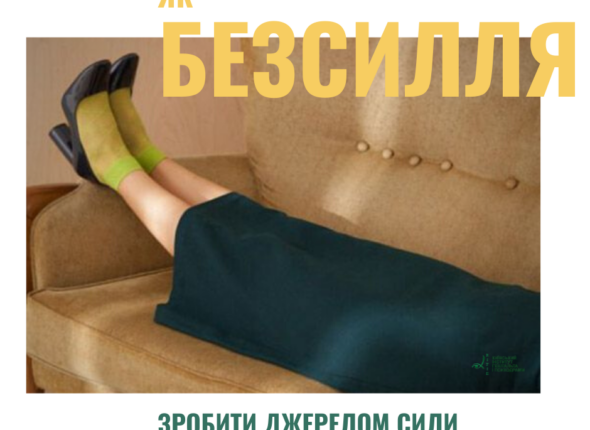
How to Turn Powerlessness into Strength?
There is a lot of talk now about the experience of powerlessness (unfortunately, the surrounding reality does much to encourage it). I want to stress that powerlessness is not a feeling but precisely a state. And a state is a characteristic of...

Needs in a Relationship: How to Speak About Your Needs Without Devaluing the Other
Closeness is not only about love. It is about dialogue. About the courage to be yourself next to another person. About vulnerability. We are often afraid to speak about our needs — especially in a relationship. It feels like selfishness, like we...

Without the Inner Child There Will Be No Adult
If you ignore your inner child, your adulthood is not the real thing. It is more like a game of dress-up: «let’s pretend to be grown-ups». Don’t believe it? Read on) Real adulthood does not begin with responsibility, or with a career,...

How to Un-Gestalt a Situation? Looking for the Figure in Everyday Life
The devil is in the details. Usually they are easy enough to spot after the fact. It is a little harder to make out the potential details while it is happening — to see room for manoeuvre in something that at first...
Facts About Field Theory in Gestalt Therapy: What Do Physics and Philosophy Have to Do With It?
1. Roots in physics: Field theory in psychology borrowed its core ideas from physics, where the concept describes a space under the influence of various forces that change it and are themselves changed by that influence at the same time. This move...

The Dance of Relationship: A View of Closeness and Separation in a Couple
Robert Resnick described the dynamics of human relationships very beautifully, comparing them to an endless dance of closeness and distance. This metaphor captures the smooth and often complicated movements between partners in a relationship, the rhythmic approaching and moving away that is...

On elastic boundaries
Elastic boundaries — what do they look like? Like this: it is when you know how to say “no”, but you say “no” gently. You can repeat your “no” two, three, four times, but on the fifth you agree after all —...

Psychotherapeutic Commentary on Quotes and Aphorisms
In the 1990s it was fashionable at trainings to urge people: «Your life isn’t working, take responsibility for your life». That doesn’t work. You cannot take ownership of responsibility for a choice that is determined by trauma, by culture, by a reference...

WHY IT MATTERS NOT TO MERGE WITH YOUR INNER CHILD
The inner child is an important part of our personality. Different approaches call this part differently: a subpersonality, an archetype, a behavioural pattern. References to the inner child as a part of our soul can be found in many cultures. Which leads...