




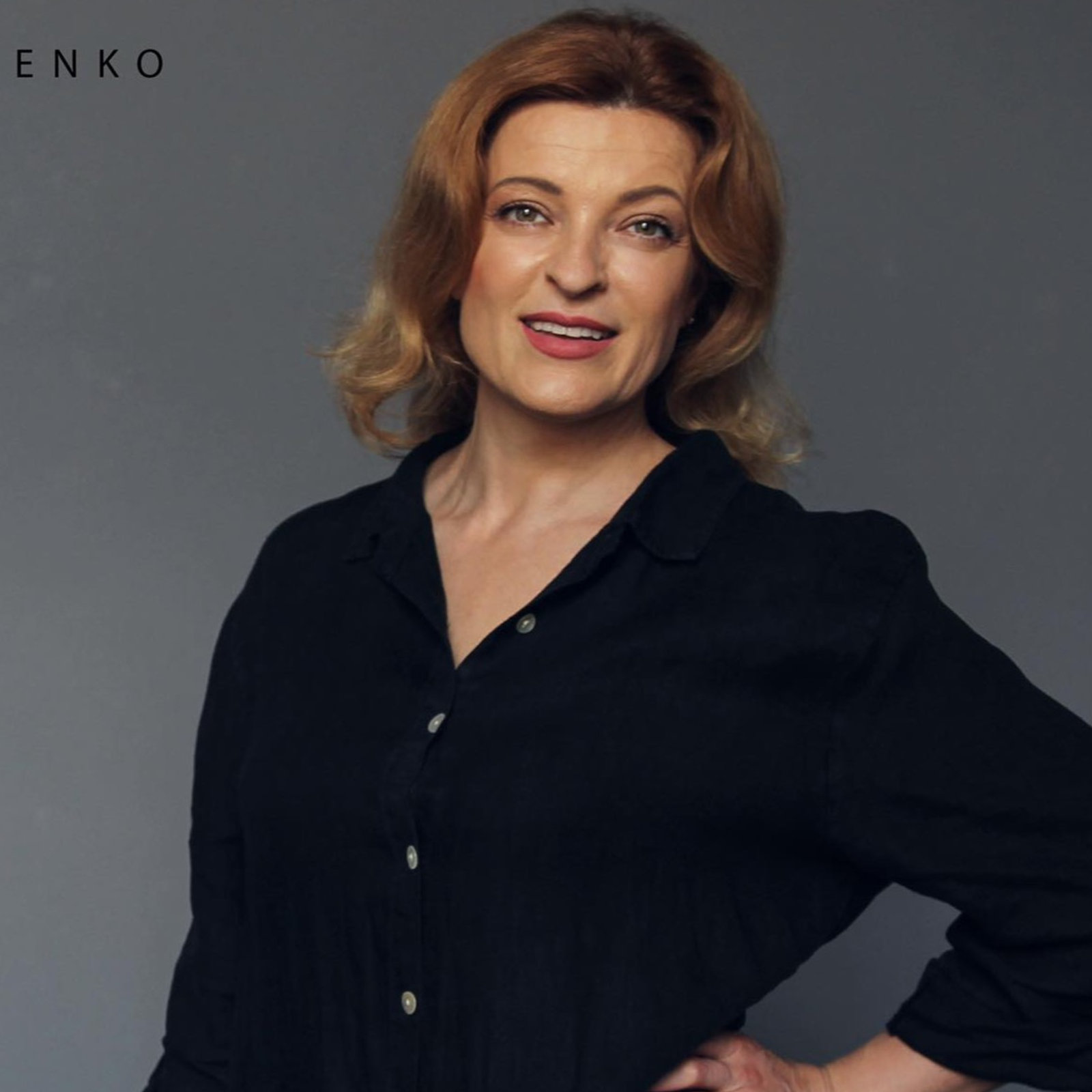
Certified gestalt therapist. Leader of therapy groups
+4916093800125
Skype: nimishchenko nataliyamischenko77@gmail.com
Nataliia about herself
«Gestalt, my own psychotherapy and learning this craft have let me understand a great deal, both in my personal life and in my professional one.
I understand that therapy does not make people happy; it makes them more aware, and awareness always gives you the chance to choose and to keep your balance in the flow of life. I am glad I have this path — the path of my personality growing up and of my forming as a professional.
It is what lets me catch the moments of life and take joy in small things, and not only small ones. For me therapy is the chance to change something in my own life.
That means inner changes as well as outer ones; it is the chance to understand myself better, to hear myself, to care for myself. It is a search for meanings, both small and large. Therapy is an investment in yourself, and for me it pays back with interest.
It is not always an easy path — more often a hard and winding one, and you often meet the disappointment of walking in circles; but with every new day, millimetre by millimetre, you keep going and understand that you are moving in the right direction.
I take sincere joy in my clients’ changes and new discoveries — that is the result of my work. I feel and see that my lectures and practical sessions have become far more interesting and productive, and that I have something to share.
My path in psychology is very interesting, ambiguous, winding, at times tense and hard, at times light and inspired; but I know for certain that I choose it, and it brings a great deal of joy and happiness.»
Specialisation in therapy:
-
difficulties in relationships
-
codependent and counter-dependent patterns of behaviour
-
the problem of loneliness — the saving or the destruction of the personality
-
conflicts in relationships: in the family, at work, with people close and not so close
-
work with developmental trauma and shock trauma
-
how to take care of yourself in a difficult situation, how to understand yourself, your resources and your relationships better, how to be in close relationships without losing your wholeness
-
work in the traditions of gestalt therapy and the bodynamic approach
Nataliia’s professional path: «I have been in psychology for quite a long time; my education in this rather young science began in 1994. The faculty had only just opened, the field was new and unclear, and who psychologists are and what and how they do it were the main questions people asked when they heard where I was enrolling. Often I met a surprised look in reply. Here I am very grateful to my parents, who supported me in my choice and did not stand in my way, creating every condition for me to earn my longed-for degree in psychology.
In my fourth year I clearly understood that I wanted to go on studying in this field, to defend a thesis and later to teach psychology. Here I was supported by my teachers, the masters of psychology V. K. Kalin, N. F. Kalina, K. V. Korostelina, I. V. Ziabkina and Ye. V. Chornyi. Every time I met difficulty, their wise words were the foundation of my safety, and I carried on working. At the start of the 21st century two important events happened in my life — my wonderful daughter Oleksandra was born and my thesis saw the light. In 2002 I defended it. Then I taught and took part in many international educational projects.
And all would have been well — carry on working — but there was always the feeling that practice was missing, specifically counselling, group and therapeutic work. I understood more and more that a psychologist without practice is like a bird without wings, and I wanted so much to fly. And while I was on maternity leave after my son Tymofii was born, I began to think about further training in psychological counselling and psychotherapy.
This, to my mind, is the «tastiest» part of my education. I became interested in gestalt as a direction of psychotherapy: first I attended various master classes and conferences, then I wanted more, and my perfectionism won — I wanted an education and a therapist’s certificate in this field. So I began studying at the Kyiv Institute of Gestalt and Psychodrama and completed all three levels with enormous pleasure.
I have never studied with such eagerness and pleasure — yes, precisely pleasure. Very often I tell my children and my students that studying can be a pleasure if you really want it, and I always wish that for them most sincerely.»
Nataliia’s diplomas and certificates:
-
1999 – Simferopol State University named after M. V. Frunze, speciality «Psychology», qualification «Psychologist»
-
2002 – H. S. Kostiuk Institute of Psychology of the Academy of Pedagogical Sciences of Ukraine. Candidate of psychological sciences in the speciality «Social psychology»
-
2005 – Academic title of associate professor of the department of psychology
-
2012 – Kyiv Institute of Gestalt and Psychodrama, faculty of gestalt therapy, first level
-
2014 – Participant of the educational programme «The butterfly effect», work with developmental trauma in the gestalt approach, trainer – Olena Abramova (Kistaieva)
-
2015 – Moscow and Kyiv institutes of gestalt and psychodrama, second level – professional training programme in «Gestalt therapy / Gestalt counselling», qualification «Gestalt therapist, gestalt consultant»
-
2014 – Bodynamic shock / Work with trauma and PTSD, Bodynamic International ApS (Denmark)
-
2015 – Basic course in bodynamics (Bodynamic foundation training), Bodynamic International ApS (Denmark)
-
2016 – Participant of the programme «Working with body process», lead trainer – Peter Philippson, Manchester Gestalt Centre
-
2017 – International long-term educational programme of the third level «Professional development in gestalt therapy and gestalt training in work with a group»
Nataliia on gestalt: «For me gestalt is a “living” therapy — therapy in contact and about contact. P. Philippson’s view is very close to me: “I proceed from the idea that gestalt sees therapy as a mutual exploration of how the client is present in life, and especially of how they make contact or avoid it, what they let themselves be aware of and which awareness they block. In time the client can use the situation of therapy to experiment with new ways of making contact and new areas of awareness. Gestalt therapy is therefore one of the methods that work not on ‘fixing’ a problem but on exploring and changing the relationship with the world in which the problem appears.”
And of course the principle of «here and now» — how hard it is to keep your balance in the continuum of time, between the past, the present and the future. This principle states that what matters in the field is present in the present, not in the past or the future. We are affected neither by a past that no longer exists nor by a future that is still to be chosen. And in therapy it is possible to change the patterns of how people relate to what happened to them in childhood, how they move in the present, and which parts of the future they choose to bring about.»